Stamps in the Gravy: Why Holiday Travel Records Are the Flimsiest Alibi on the Board

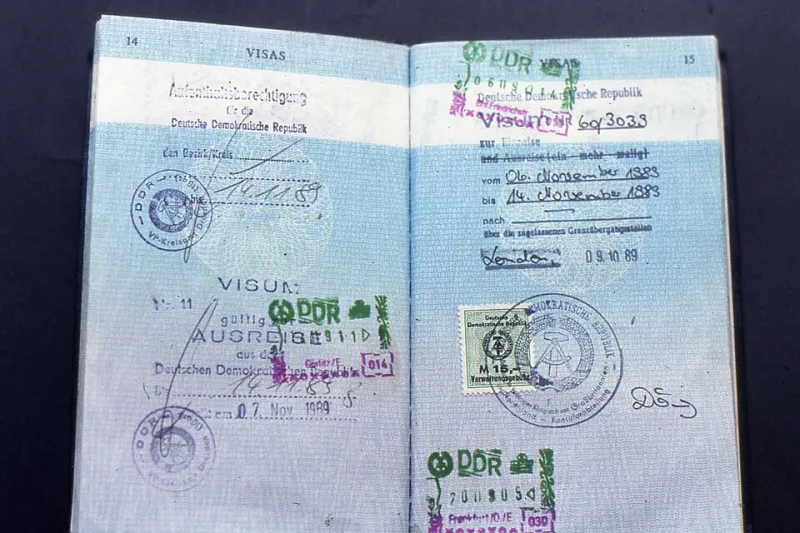
Photo: *angys*, CC BY-SA 4.0, via Wikimedia Commons
Every November, the same scene plays out in group chats and comment sections from Bangor to Bakersfield. A suspect gets floated, and someone drops the trump card: look at the receipt. He was two states away at 4:12 p.m. on Thanksgiving. Case closed, pass the pie.
Not so fast. Holiday travel records are among the most overtrusted artifacts in the armchair detective toolkit — right up there with a neighbor's Ring camera and a cousin's confident recollection of a license plate. They're useful. They're also narrow, easily misread, and shaped by the strangest two weeks on the American calendar.
So before you staple a toll transponder read to your theory board, let's walk the paper trail the way a careful reader would.
What a Toll Transponder Actually Testifies To
E-ZPass, I-Pass, SunPass, TxTag, FasTrak — the brand changes by state, the logic doesn't. A transponder gets read at a plaza. That's the event. What it proves is that a tag associated with an account passed a specific point at a specific time.
What it doesn't prove is who was driving, who was in the car, or whether the tag was even in the vehicle it's registered to. Transponders live in gloveboxes, get swapped between family cars, ride along in rental fleets, and occasionally produce duplicate or misread entries that get corrected weeks later in billing. During the holiday crush, agencies also run free-flow and cashless lanes that generate image-based reads — and those get processed on a delay, sometimes with time-zone fuzz at the edges.
A toll ping is a great anchor for a route. It's a lousy anchor for a person.
Airline Manifests: Booking Is Not Boarding
A manifest is a list of names attached to a reservation. It is not, by itself, proof that a body occupied a seat. Standbys get cleared, no-shows get logged, seats get resold, and codeshare records can show a passenger on a flight they never touched. A TSA scan is not a gate scan. A gate scan is not a seatbelt.
Here's the seasonal wrinkle: holiday schedules are chaos. Weather reroutes whole banks of flights, and the rebooking trail is often messier than the original itinerary. If someone says "he couldn't have been there, he was on a 6 a.m. out of O'Hare," the fair follow-up is: do we have a boarding scan, or just a confirmation email? One is a document. The other is a receipt for a plan.
Gas-Station Timestamps and the Pump That Lies
Pay-at-the-pump receipts feel like bedrock. They aren't. A fuel authorization proves a card was used at a location at a moment — not that the cardholder was holding it. Fleet cards, skimmed numbers, and the humble "my brother borrowed my truck" all live in this gap.
Then there's the clock problem. Point-of-sale systems drift. Daylight saving ends in early November, and not every back-office system updates cleanly. A pump that says 11:58 p.m. might be reporting a transaction that happened at 12:03. If a timeline hinges on six minutes, you owe it to yourself to ask whose clock you're reading.
Hotel Key Logs and the Room That Wasn't Empty
Key-card logs are catnip for timeline builders. They look precise — down to the second. But a log entry means a credential was used on a lock. It doesn't tell you who swiped, whether a second key was issued, or whether the room was shared with three cousins and a dog. Digital keys, late check-ins, adjoining rooms, and front desks running on holiday staffing all thin out the story the log appears to tell.
And here's the holiday twist: hotels near family destinations fill up with multi-room groups. "He checked into Room 214 at 9:40" is a fact about a lock. It's not a fact about a man.
Restaurant Receipts: The Check Isn't the Customer
Signed receipts, tip lines, split checks, reservations under a familiar name — restaurant paper is wonderfully human and wonderfully unreliable. A receipt proves a check was paid. It doesn't prove who ate the meal, who signed, or whether the card was handed across the table. Holiday hours make it worse: kitchens close early, private parties take over dining rooms, and a restaurant that's "closed" on Christmas Eve might have been wide open for a catered event.
The Seasonal Noise Problem
Most bad alibi reasoning comes from a handful of assumptions that feel true in December and aren't:
- "Nobody travels on Thanksgiving morning." Actually, the Wednesday-night and Thursday-morning windows are some of the busiest of the year, just on different corridors than people expect.
- "The roads are empty at 3 a.m." Not on Black Friday, not around midnight mass, not near any outlet mall.
- "Everything's closed on Christmas." Gas stations, diners, and interstate exits say otherwise.
- "The timestamp is the timestamp." Time zones, DST, and POS drift all say otherwise.
A Practical Checklist for the 2026 Holiday Crush
When a holiday record lands in your lap, run it through these before it hits the board:
- Name the source. Is it the original custodian — the toll authority, the airline, the hotel's property management system — or a screenshot of a screenshot?
- Separate the artifact from the inference. A receipt is an artifact. "He was 200 miles away" is an inference. Label them differently.
- Check the clock. Which time zone? Which system? Was DST observed? Does the record agree with a second, independent source?
- Ask who else could have generated it. Shared accounts, family cards, rental cars, borrowed tags.
- Weigh the season. Holiday schedules bend normal patterns. A gap in records may mean a closure, not a cover-up.
- Look for corroboration, not confirmation. One record is a data point. Two independent records that agree are a timeline.
Bottom Line
Holiday travel records are genuinely useful — often the best structural evidence available in a case that spans states. But they're corroboration, not conviction. They describe accounts, credentials, and cards. The person is always one inference away.
So this season, enjoy the pie. Just don't let a gas receipt do the thinking for you.