The Forecast Is Not a Witness: A Weather-Alibi Scorecard for Armchair Detectives
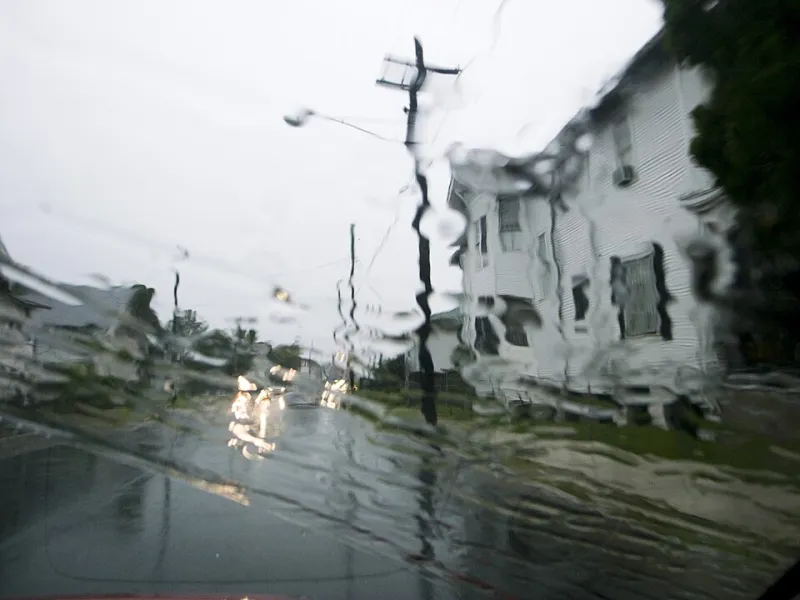
Photo: Derek Bridges, CC BY 2.0, via Wikimedia Commons
Every armchair case file eventually gets a weather alibi. The suspect couldn’t have driven because it was pouring. The witness couldn’t have seen anything because fog rolled in. The neighbor swears the roads were iced over by 9:15, which sounds precise until you remember that the neighbor also swears the garbage truck comes on Tuesdays and has been wrong about that for two years.
Weather records are genuinely useful. They are also easy to overread. A radar loop is not a confession. A snowfall total is not a polygraph. The trick is figuring out which weather claims sharpen a timeline and which ones just add atmospheric noise.
The Scorecard Rules
I’m grading these by real investigative weight, not by how cinematic they sound. The criteria are simple: time precision, location precision, independence from the people telling the story, and resistance to being interpreted by someone who just discovered the color scale on a weather app. A strong weather alibi should survive three questions: Exactly where? Exactly when? And what kind of record is this — observation, forecast, or memory?
1. Airport Observations: The Grown-Up in the Room
Quality-controlled station observations — the METAR and ASOS reports pilots and meteorologists use — are the sturdiest weather evidence most cases will ever get. They are timestamped, standardized, and usually quality-checked. If the official station at the airport reported freezing fog at 9:12 p.m., that is a real data point, not a vibe.
The limit is geography. An airport station tells you what happened at the airport, not at a cabin twelve miles away, not at a gravel pull-off, and not on the back road where the suspect claims the weather turned. Microclimates are real. So are instrument quirks and rounding. This is excellent for pinning down a regional condition; it is not a neighborhood surveillance camera.
2. Radar Loops: Great Timestamp, Lousy Ground Truth
Radar is the favorite toy of the late-night timeline crowd because it looks decisive. You can scrub it, freeze it, and point at a purple blob like a prosecutor with a laser pointer. And radar genuinely helps with timing: when precipitation entered a county, how a storm line moved, whether a gap opened at the relevant hour.
But radar detects what’s happening in the atmosphere, not necessarily what’s hitting the pavement. Virga, hail, beam height, clutter, and calibration matter. A radar return over the general area does not prove that a specific driveway was slick or that a specific person got soaked. Treat radar as a timeline tool, not a witness statement. It can narrow the window. It cannot describe the suspect’s windshield.
3. Snowfall Totals: Accurate Enough to Ruin a Story, Not Enough to Save One
Snow totals feel wonderfully concrete. Eight inches is eight inches. Except snow is one of the most local weather variables there is. A trained observer can record six inches while a drift-prone road a mile away is impassable, or vice versa. CoCoRaHS volunteers and official stations are useful, but daily totals usually don’t answer minute-by-minute questions. “Eight inches by morning” does not prove the roads were impossible at 9:15 p.m. It proves that by the next morning, someone had a yardstick and a commitment to documentation.
This is where alibis get lazy. Snow totals can support a general claim that travel was bad. They rarely prove a precise claim that a specific route was closed at a specific time.
4. Storm Reports and Spotter Logs: Useful, Human, Slightly Late
Local storm reports from trained spotters and weather officials are solid corroboration, but they are still human observations. Timestamps are often approximate. Reports arrive after the fact. People estimate. The record may say “around 9 p.m.” when the defense needs 9:15 and the prosecution needs 9:05.
That doesn’t make them worthless. It makes them supporting evidence. If a spotter report, a radar loop, and a station observation all point the same direction, you have a triangle. If the spotter report is standing alone, you have a guy with a rain gauge and a memory.
5. Fog and Visibility: The Moody Middleweight
Fog is fantastic atmosphere and mediocre proof. Visibility reports can be helpful, especially from airports or official stations, but fog is patchy by nature. A quarter-mile visibility at one location can coexist with clear road a few miles away. “It was foggy” is a regional mood; “visibility dropped to a quarter-mile at this station at this time” is a data point.
The gap between those two statements is where armchair theories go to die.
6. The Neighbor Who Swears It Was Pouring
Neighbor testimony is the folk music of weather alibis: familiar, heartfelt, and frequently off-key. A neighbor can absolutely provide useful context. Maybe they were outside, maybe they remember a power flicker, maybe they have a doorbell camera with audio. But “pouring at 9:15” is a memory, not an instrument. It can be contaminated by later storms, group chats, weather apps, and the very human desire to be helpful.
Grade it low on its own. Grade it higher if it is specific, independent, and backed by something other than a feeling. The neighbor who says “I know because my basement flooded at 9:14 and I texted my brother” is a different witness than the neighbor who says “oh, it rained all night, honey.”
7. The Vibe Forecast: “Nobody Could Have Driven in That”
This is the weakest entry: the general claim that the weather was so bad no reasonable person could have done whatever the timeline says they did. It sounds like evidence. It is usually just a forecast with a grudge.
Weather apps make this worse. People screenshot forecasts and treat them like observations. A forecast is what someone expected. An observation is what happened. An alibi built on the difference between those two things is built on fog.
How to Use Weather Without Getting Lost in the Doppler
Ask three questions before you put a weather claim on the case board. First: where was the instrument or observer? Second: what exactly did it record — precipitation, visibility, accumulation, or just a forecast? Third: does the timestamp match the claim, or are we rounding “around 9” into “9:15” because the story needs it?
Weather can be a fence. It can narrow where a person could have been and when. It is not a fingerprint. It does not identify anyone. It just makes some stories harder to tell.
Case-File Takeaway
Rank weather alibis the way you’d rank any other witness: by specificity, independence, and whether the record is actually saying what the internet claims it says. Airport observations and radar timestamps can sharpen a timeline. Snow totals and fog reports can support a broader picture. The neighbor’s memory is a garnish, not the meal. And “it was raining, allegedly” is not an alibi until someone can tell you where the rain was measured, when, and by what.