Draw Me a Suspect: Seven Famous Composite Sketches, Graded on Whether They Actually Moved the Case
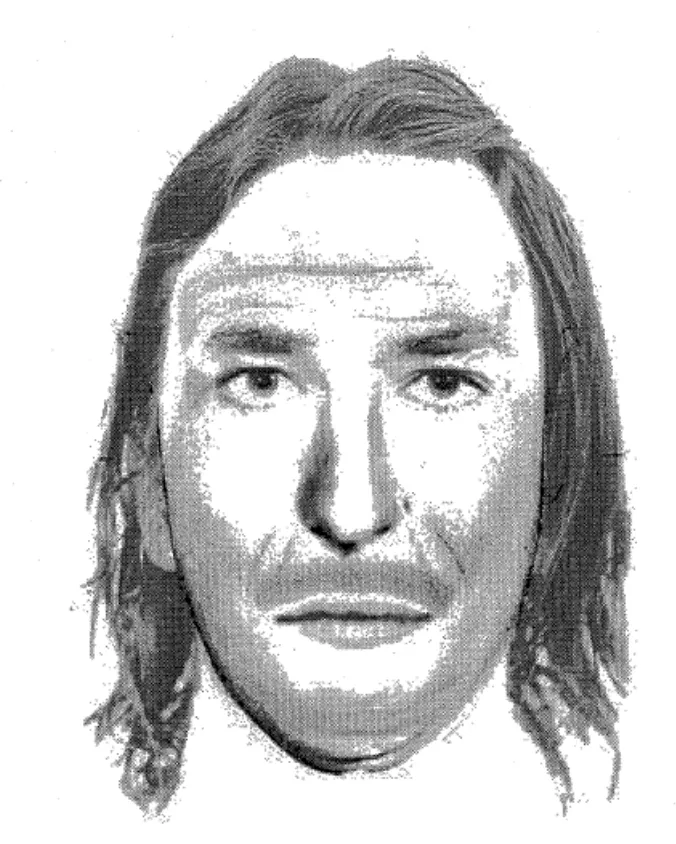
Photo: Farmers Branch Police Department, Public domain, via Wikimedia Commons
Composite sketches occupy a weird place in true crime. They're not photographs, not confessions, not even really portraits. They're a police artist's translation of a panicked memory, filtered through a stranger's vocabulary and a set of facial feature books. And yet, in 2026, a single sketch can still launch a thousand Reddit threads.
That's the problem. A sketch feels like evidence because it looks like a face. But a face is not a fact. So let's grade some famous ones — not on artistic quality, but on whether they actually moved the case or just moved the conversation.
The Sketch Is a Rumor With Eyebrows
Eyewitness memory is not a video recording. It's a reconstruction, and it gets edited by stress, time, weapon focus, and whatever the witness saw on the news afterward. A composite sketch is one more round of editing. The artist asks questions, the witness guesses, and the pencil makes it look official.
That doesn't make sketches useless. It makes them leads. The question is whether a given sketch generated a useful lead, narrowed the suspect pool, or just became a decorative prop in a documentary.
How We Graded Them
We used four criteria: did it produce a useful tip, did it narrow the search, did it hold up against the actual suspect, and did it waste time or wreck someone's life. An A is a sketch that moved the case. An F is a sketch that became the case.
7. Oklahoma City's John Doe 2 — The Sketch That Became a Ghost
After the 1995 bombing, a sketch of a second suspect — 'John Doe 2' — circulated widely. It was based on a witness who saw a man near the Ryder truck. The problem: the man may have been a bystander, a guard, or a memory. The sketch took on a life of its own, generating tips and conspiracy theories. The FBI eventually walked it back.
Grade: F. Not because the artist did anything wrong, but because the drawing became a suspect.
6. The Unabomber Hoodie — Iconic, Generic, and Oddly Useful
The famous sketch of a hooded, sunglasses-wearing figure is less a face than a silhouette. It could be your uncle, your mechanic, or a guy in a 1990s catalog. It didn't solve the case — the manifesto did — but it kept the Unabomber in the public eye.
Grade: C-. Useful as a logo, lousy as a lead.
5. The Zodiac Sketch — A Mood Board With a Gun
The Zodiac case produced several sketches, and the best-known one looks like a guy who'd be cast as 'suspicious librarian.' It gave the public a shape and a vibe, but it never led to an arrest. The case is still open, and the sketch is still doing cameos in documentaries.
Grade: D+. Atmospheric, not actionable.
4. The DC Sniper White Van — The Sketch That Pointed at the Wrong Vehicle
During the 2002 Beltway sniper attacks, sketches and descriptions of a white van sent the public looking for the wrong vehicle. The actual shooters used a blue Caprice. The white van became a nationwide distraction.
Grade: D. A sketch of a vehicle is still a sketch — and this one cost time.
3. The Golden State Killer Sketch — A Face From 1970s Memory
The 2016 release of a sketch in the Golden State Killer case was meant to generate tips. It showed a younger man with a round face — not the aging suspect eventually identified through genealogy. It didn't crack the case. DNA did.
Grade: C. It kept the case warm, but it didn't point at the man.
2. Son of Sam — The Face That Almost Fit
The Son of Sam sketch looked enough like David Berkowitz to generate tips, and it's one of the better-known examples of a composite that wasn't useless. But Berkowitz was caught because of a parking ticket, not because a witness picked him out of a lineup.
Grade: B-. Good sketch, weird solve.
1. Night Stalker — The Sketch That Actually Looked Like the Guy
The composite of Richard Ramirez circulated in 1985 and was close enough that people recognized him from the news. Ramirez was ultimately caught by civilians in East Los Angeles after his photo was published. The sketch wasn't the arrest, but it was a legitimate assist.
Grade: A-. It did what a sketch is supposed to do: put a usable face in front of the public.
The Armchair Checklist: When a Sketch Is Evidence
Before you treat a composite like a photo, ask these questions:
- Who drew it, and how many witnesses contributed? One witness is a sketch. Five witnesses is a committee.
- How long after the event was it drawn? Memory fades fast, and confidence is not accuracy.
- Was the witness under threat? Weapon focus and stress can blur faces.
- Is there a cross-race identification issue? It's a real factor, and it matters.
- Was the sketch released before or after a suspect was known? Contamination is a quiet problem.
- Does the sketch match a specific tip, or is it just generating generic tips? Generic tips are not nothing, but they're not a case.
- Are commenters treating the sketch as a mugshot? That's your red flag.
The Bottom Line
Composite sketches are not photographs. They're leads with eyebrows. In 2026, they still work best as conversation starters, not verdicts. Rank them, meme them, argue about the jawline — but don't convict anyone because the drawing has your ex's chin.
The sketch is a question, not an answer. Treat it that way, and you'll be a better armchair detective than most of the people in the comments.