The Paper Doesn't Remember: Seven Archive Traps That Trip Up Armchair Detectives
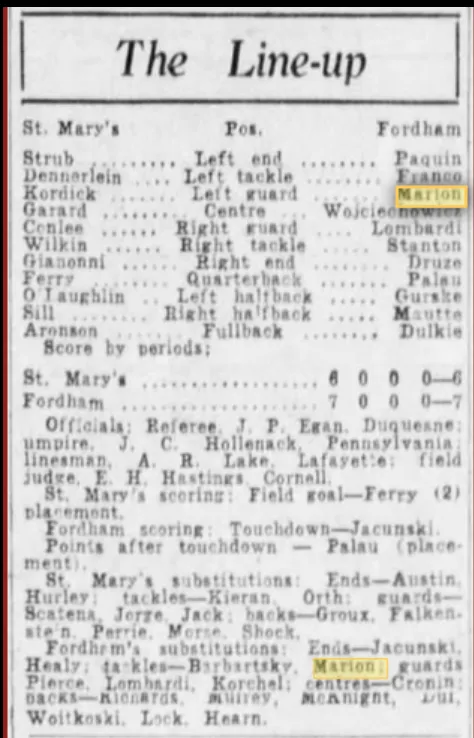
Photo: Scanned Documents found in archive news articles from 1936. News site unknown., CC BY-SA 4.0, via Wikimedia Commons
There is a particular thrill in pulling up a newspaper page from decades ago and seeing a name you recognize in a headline. The type is fuzzy, the page is crooked, and suddenly you feel like you are holding a piece of the case itself. That feeling is useful. It is also a trap.
An archive is not a witness. It is a business record, a community bulletin board, and sometimes a rumor mill with a printing press. At Prime Crime, we love a late-night clipping rabbit hole as much as anyone, but the armchair detective needs to know when a headline is a lead and when it is just old ink doing what old ink does. Here are seven archival traps, ranked from annoying to case-warping.
7. OCR Ghosts and Typo Gremlins
Optical character recognition has gotten better, but it still turns Smith into Srnith and dates into digital confetti. A search for a suspect's name may miss the one article that matters because the scanner saw an F where the page had an E. Worse, some databases let you search the text without showing you the page image, so you never notice the machine's mistake.
Fix it by searching name variants, initials, street names, and case numbers. Then open the actual page scan. If the text and the image disagree, trust the image and your own eyes — not the search box. In 2026, we have better tools, but we still have bad OCR.
6. The Retraction That Never Made the Headline
A paper runs a dramatic story on page one. Two weeks later, a quiet correction runs near the classifieds. The archive may index the first story and bury the second. Armchair detectives often find the splash and stop, which is how a rumor becomes a permanent feature of a case file.
Always search forward. Look for follow-up stories, corrections, editorials, and court briefs. If a paper had a correction policy, find it. If it did not, find the next paper that covered the same claim. A missing retraction does not prove the original story was true. It may only prove the correction was boring.
5. The Small-Town Silence That Is Not Proof
A common move in online case threads is to say that because a local paper never mentioned something, it probably did not happen. That is not how local coverage works. Weekly papers have tiny staffs, missing issues, and longstanding blind spots. Some communities, especially poor neighborhoods and immigrant communities, got less coverage than others — and sometimes still do.
Silence in one archive is not evidence of silence in the world. Check neighboring papers, city directories, church bulletins, school records, and local library microfilm. Ask a reference librarian. They are the closest thing the archive has to a human index, and they know which gaps are missing pages and which gaps are missing priorities.
4. Language That Has Aged Into a Different Meaning
Old papers use words that modern readers hear differently. Terms for mental health, race, immigration, and morality have shifted, and so have phrases like alleged and known to police. A 1950s story may call someone a suspect in language that sounds like a verdict to a 2026 reader. A modern reader may also mistake old slang for a clue when it was just the vocabulary of the day.
Read for context, not for gotchas. Ask what the writer meant to say to the readers of that time. Then ask what the writer could actually prove. Those are different questions, and the gap between them is where a lot of bad case theories are born.
3. The Headline Says One Thing, the Body Says Another
Headlines are written to sell papers, not to satisfy evidentiary standards. A headline may say a man was linked to a crime when the body says he was questioned and released. A deck or subhead may soften the claim, or sharpen it. The jump line may send the rest of the story to page 12, where the actual facts are waiting.
Never build a timeline from headlines alone. Read the full article, including the continuation. Look for attribution: police said, a neighbor claimed, a prosecutor alleged. If the story does not name a source, treat it as a mood, not a fact.
2. The Clip That Lost Its Context
Clippings are cropped by nature. A researcher saves the one paragraph that mentions the case and leaves behind the adjacent column, the photo caption, the correction box, or the follow-up on the next page. That missing context can flip the meaning of the whole piece.
When you can, go back to the full page. Look at what ran beside the story, what the caption said, and whether the article continued elsewhere. In digital archives, the page view is not a luxury. It is the difference between reading a document and reading a sentence someone cut out of it.
1. Syndicated Copy Dressed Up as Corroboration
This is the big one. A wire story runs in twenty papers, and suddenly an armchair detective has twenty sources. But it is one source, copied. The same phrases, the same unnamed officials, the same missing details — that is not a chorus. That is an echo.
Before you count a claim as confirmed, check the byline, the dateline, and the wording. If five papers ran the same Associated Press story, you have one report. Independent confirmation looks different: a local follow-up, a court record, a named official, a document, or a reporter who actually did fresh reporting. Corroboration is not the number of links you can paste. It is the number of independent paths to the same fact.
How to Read Old News Without Getting Played
Start with the full page, not the search result. Search forward for corrections and follow-ups. Check at least one neighboring paper. Separate what was alleged from what was proven. And when a clipping gives you a shiver, wait one night before you call it a lead. The archive is a wonderful place to ask better questions. It is a terrible place to get a final answer.