The B-Roll Alibi: How True-Crime Reenactments Quietly Rewrite What You Remember
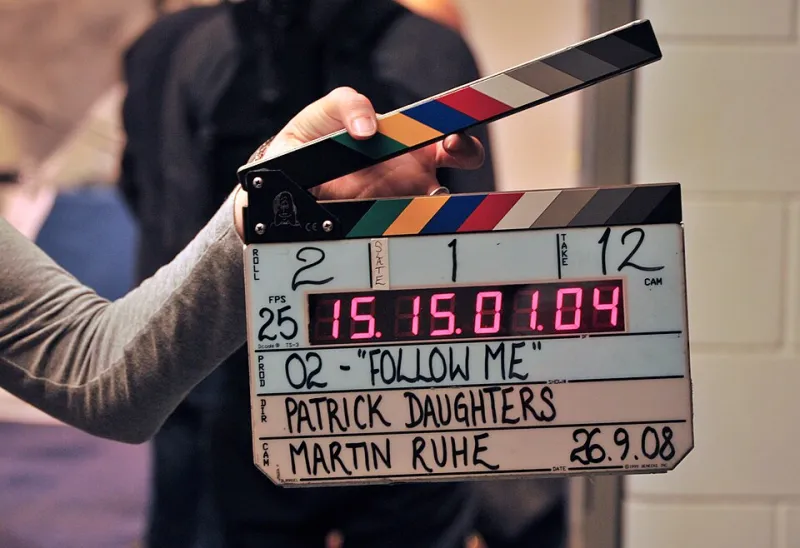
Photo: Mattbr, CC BY 2.0, via Wikimedia Commons
A blurry actor in a fleece jacket walks down a hallway. The camera holds too long. A synth note rises. Somewhere in your brain, a file opens and gets labeled: this is what happened. That is the quiet power of the true-crime reenactment. It is supposed to be filler, a way to cover a gap in the visual record. Instead, it often becomes the visual record.
This is not a rant against dramatization. A good reenactment can help a viewer understand geography, sequence, or scale. The problem is memory. Human recall is not a camera. It is a reconstruction, and it borrows from whatever is vivid and available. A compelling reenactment is vivid and available. Over time, the actor's face, the hallway's color, and the ominous music can blend with the actual facts until the theory feels like footage.
The Quiet Problem: Reenactment Becomes Recall
Psychologists call it source monitoring: the brain's sometimes shaky ability to remember where a memory came from. Did you read that detail in a court document, or did you see it in a documentary? Did the suspect actually say that line, or did an actor say it while a caption explained the theory? True crime is a machine for blurring that line.
In 2026, the genre is built for binge-watching. Episodes move fast, music swells, and recreations fill the screen while a narrator hedges with words like allegedly and prosecutors say. The hedge is in the audio. The certainty is in the image. Guess which one sticks.
The Prime Crime Distortion Ranking: From Least to Most Sticky
We ranked six common recreation styles by how much they tend to distort a viewer's memory of the evidence. This is not about which style is most artistic. It is about which one is most likely to make you feel like you saw something you did not.
6. The Obviously Fake Blurry Actor Reenactment
This is the classic: soft focus, muted colors, an actor who looks nothing like the real person. It ranks lowest because it is visibly a reenactment. The seams show. That does not mean it is harmless. A visual can still plant an image. But at least your brain gets a warning label.
5. The Empty-Room Slow Pan
No actors, just a hallway, a parked car, a house at dusk. It feels neutral because nothing is being depicted. In practice, the empty room is doing emotional work. The slow pan says something happened here, and the music says it was bad. It adds mood without facts, which makes it a soft distorter rather than a hard one.
4. The Composite What-Might-Have-Happened Sequence
This is the montage that stitches together known facts, inferred movements, and pure staging. A car pulls out. A door opens. A figure crosses a window. Some of it may be sourced. Some of it may be the show's best guess. The danger is that the whole sequence arrives as one continuous scene, so the guess borrows authority from the facts around it.
3. The Stylized Bodycam or CCTV Recreation
Here the show imitates found footage: fake timestamps, fisheye distortion, grainy black-and-white, a shaky frame. This style is sticky because it mimics the look of evidence. Real bodycam and real surveillance footage have their own limits, but at least they are records. A stylized recreation is a performance wearing a record's clothes.
2. The Dramatized Interrogation or Confession Scene
This one is a memory hazard with a badge. An actor sits across from another actor and says the thing the theory needs them to say. The scene can make a legal process look cleaner, faster, and more conclusive than it is. It can also turn a denied allegation into a dramatic beat. If you remember the confession more vividly than the disclaimer, the reenactment has done its job too well.
1. The Prestige Period Reconstruction
This is the most distorting style because it feels the most authoritative. Sepia tones, film grain, period wardrobe, careful sound design, a house that looks exactly like the photos. It does not look like a reenactment. It looks like an archive. That is the trick. The higher the production value, the more likely the image will settle into memory as historical fact rather than staged interpretation.
How to Watch Without Letting the B-Roll Write Your Verdict
- Identify the recreation immediately. Look for credits, disclaimers, and the telltale soft focus. If the show does not label it, label it yourself.
- Separate what happened from how it might have happened. A reenactment can illustrate a theory. It cannot prove one.
- Ask what the scene added that the evidence did not. If the answer is mood, music, or a facial expression, treat it as decoration.
- Watch for the moment the score swells. Music is a verdict delivery system. Notice when it is doing the arguing.
- Revisit the primary record. Court documents, dispatch logs, interviews, and news archives are less cinematic and more useful.
- Talk back to the screen. If a scene makes you think he did it, ask which fact in the scene came from evidence and which came from the director.
Bottom Line
Reenactments are not evil. They are efficient. They give a streaming episode a visual language for events that were never filmed. But efficiency has a cost. The more cinematic the reconstruction, the more likely it is to become the thing you remember instead of the evidence.
Watch the show. Enjoy the show. Just do not let the B-roll become your alibi for not checking the file.