Seven Courtroom Tropes, Ranked by How Much They Mess With Your Verdict Radar
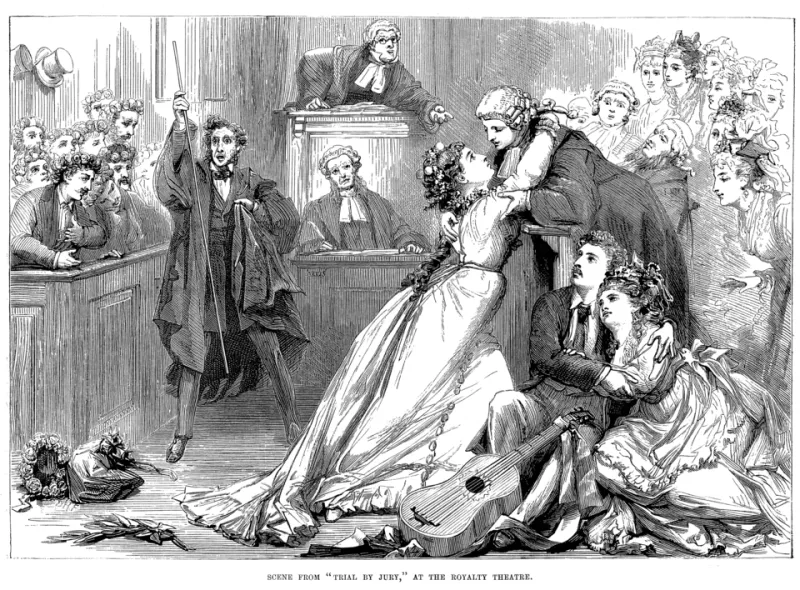
Photo: David Henry Friston, Public domain, via Wikimedia Commons
Courtroom TV has a rhythm problem: real trials are slow, procedural, and full of people saying “May I approach, Your Honor?” Crime shows have approximately eleven minutes for that. So they compress, exaggerate, and invent. That’s fine for entertainment. It’s less fine when armchair audiences start treating the tropes as a checklist for how guilt actually gets proven.
So here’s the game: seven beloved courtroom clichés, ranked by two scores. Entertainment value is how much we enjoy watching the trope. Distortion risk is how badly it teaches the wrong lesson about US trial procedure. High entertainment plus high distortion is the dangerous sweet spot — fun to watch, bad for your verdict radar.
7. The Rogue Defense Attorney
Entertainment: 7/10. Distortion: 4/10.
The rogue defense attorney bends rules, hides evidence, and gives smirking speeches that would get a real lawyer sanctioned before the first commercial break. It’s fun because defense attorneys are easy shorthand for “morally complicated.”
But the trope overstates the lone-wolf angle. Defense attorneys operate inside ethics rules, discovery obligations, and judicial oversight. A lawyer who actually concealed evidence could face discipline or worse. The bigger distortion is subtler: it teaches viewers that defense strategy is mostly vibes and trickery, when it’s often about burdens of proof, suppression motions, and making the government meet its case.
6. The Weeping Jury
Entertainment: 6/10. Distortion: 5/10.
A single juror cries. Another stares at the defendant. The foreperson reads the verdict with the gravity of a moon landing. It’s a reliable emotional button.
Real juries are instructed to decide based on evidence and law, not tears. They deliberate in private. They can be deadlocked, confused, or boringly unanimous. The weeping-jury trope isn’t the worst offender, but it feeds the idea that trials are emotional referendums rather than structured fact-finding. Verdicts aren’t supposed to be a vibe check.
5. The Objection Duel
Entertainment: 8/10. Distortion: 5/10.
“Objection!” “On what grounds?” “Relevance!” “Sustained.” It’s theater. It’s also one of the few courtroom rituals TV gets roughly right in shape, if not frequency.
In real trials, objections are legal arguments about evidence rules. They’re often brief, sometimes sidebar-ed, and frequently boring. TV makes them look like spontaneous zingers that win the day. They rarely do. An objection can keep something out or preserve an issue for appeal, but it doesn’t prove guilt or innocence. The distortion is moderate: viewers learn the word “hearsay” without learning why it matters.
4. The Surprise Witness
Entertainment: 8/10. Distortion: 6/10.
A witness nobody mentioned appears at the last second, drops a bombshell, and changes everything. Great TV. Terrible discovery lesson.
US trials have discovery and disclosure rules. Surprise witnesses are not supposed to ambush the other side in the way dramas suggest. There are notice requirements, witness lists, and remedies for late disclosures. Can surprise happen? Sure. But the trope trains audiences to expect a plot twist where the real system mostly expects pretrial preparation. It also makes people undervalue the boring paperwork that actually shapes what a jury hears.
3. The Closing Argument Mic Drop
Entertainment: 9/10. Distortion: 6/10.
The prosecutor or defense attorney delivers a soaring monologue, pauses dramatically, and basically solves the case with rhetoric. In real life, closings matter, but they’re not evidence. Jurors are instructed that attorney arguments are not testimony.
TV loves the mic-drop closing because it’s the easiest way to summarize the story. The risk is that viewers start treating a persuasive speech as proof. A good closing can frame the evidence. It can’t replace it. If the evidence is thin, the speech is just a nice coat of paint.
2. The Dramatic Reveal
Entertainment: 10/10. Distortion: 8/10.
A lawyer holds up a photo, a receipt, or a phone record, and the courtroom gasps. The music swells. The defendant’s face does a thing. Case closed.
In reality, evidence is introduced through witnesses, authentication, foundation, and rules. The “gotcha” moment is usually built over days of testimony, not one glorious zoom-in. The dramatic reveal also ignores the burden of proof. A single piece of evidence doesn’t automatically prove a case; it has to be weighed with everything else. This trope is top-tier entertainment and a genuine civic nuisance. It makes trials look like magic tricks instead of cumulative proof.
1. The Surprise Confession
Entertainment: 10/10. Distortion: 9/10.
The defendant breaks down on the stand and confesses. Or a witness blurts out the truth. Either way, the courtroom erupts. It’s the ultimate narrative shortcut.
Here’s the problem: defendants are not required to testify, and many don’t. A surprise confession mid-trial is not a normal procedural event. Confessions, when they exist, are usually litigated long before trial — voluntariness, Miranda issues, suppression motions. The trope teaches the single most misleading lesson of all: that the truth arrives as a spontaneous courtroom performance. Real cases are proven through evidence, witnesses, documents, expert testimony, and the government meeting its burden beyond a reasonable doubt.
The Verdict on the Tropes
Courtroom clichés are not evil. They’re storytelling tools. But if you’re watching a true-crime trial episode and waiting for the dramatic reveal or the surprise confession, you’re watching the wrong genre. The real drama is in the docket: motions granted, evidence excluded, witnesses impeached, instructions read to a jury that has to decide what the facts actually are.
Keep the popcorn. Just don’t confuse the mic drop with the burden of proof.