Ring Around the Suspect: What Porch Cameras Actually Solve — and What They Wreck
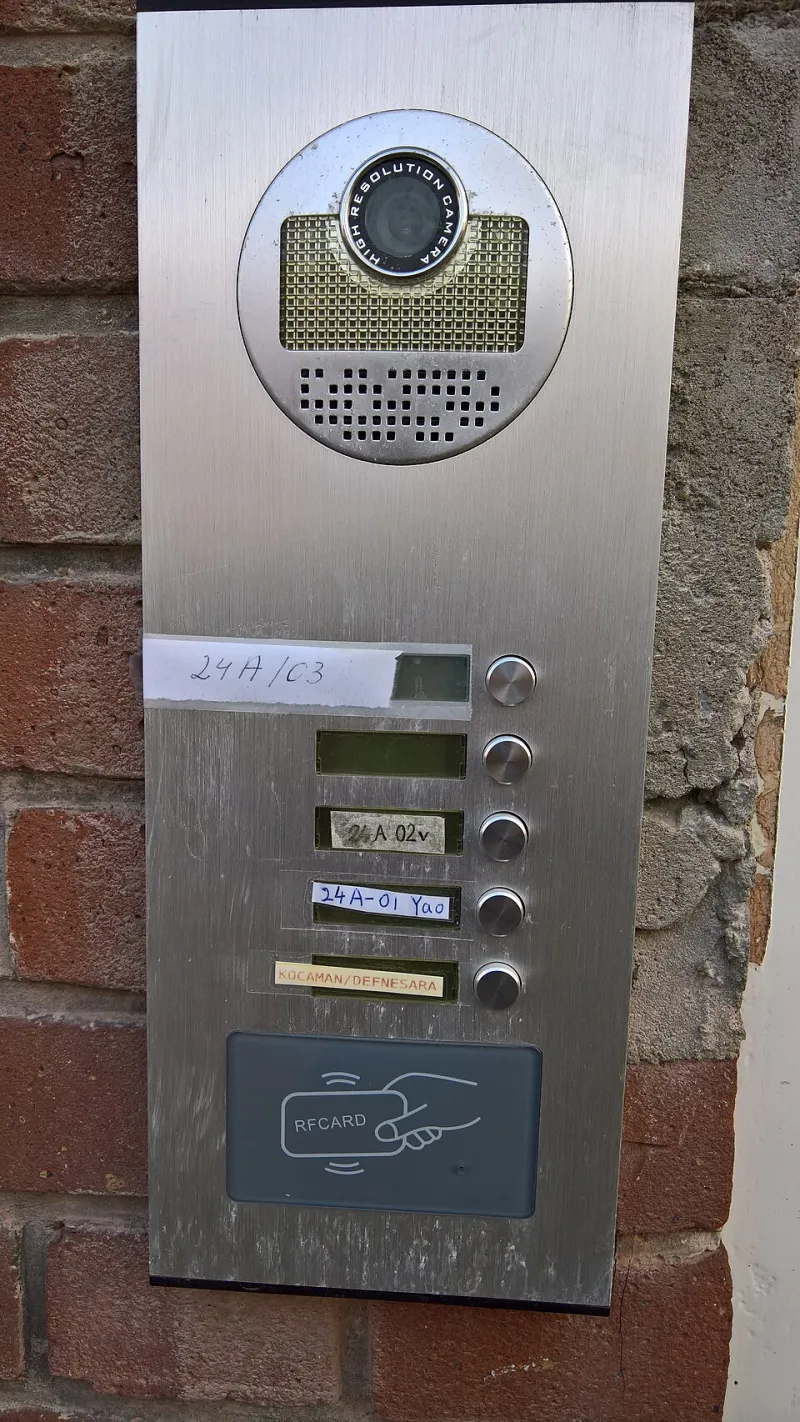
Photo: Donald Trung Quoc Don (Chữ Hán: 徵國單) - Wikimedia Commons - © CC BY-SA 4.0 International.(Want to use this image?)Original publication 📤: --Donald Trung 『徵國單』 (No Fake News 💬) (WikiProject Numismatics 💴) (Articles 📚) 22:24, 3 March 2021 (UTC), CC BY
It's 2:14 in the morning, and a 41-second clip from a doorbell camera on a suburban cul-de-sac is doing what a thousand press conferences could not: it's turning everyone with a phone into a detective.
By sunrise the clip has a nickname. By lunch it has a suspect. By dinner somebody in a Facebook group has matched a gray hoodie to a guy three towns over who, as it happens, was clocked in at a warehouse all night.
Welcome to the porch-camera era of American true crime. The first 48 hours of a case used to belong to canvassing officers and a couple of grainy gas-station stills. Now they belong to whoever uploads first.
Let's be clear about the premise here at Prime Crime: we are not anti-video. We are pro-accuracy. And those two things have been drifting apart at roughly the speed of a viral repost.
The Genuine Wins Are Real
Start with the good, because there's plenty of it. Consumer cameras have solved the cases nobody used to bother solving. Package theft rings. Hit-and-run drivers. A missing kid walking past a lens at 6:40 p.m. when the family swore she never left the yard. That is real investigative value, and it's cheap — a police department can pull a neighborhood's footage in an afternoon instead of knocking on doors for a week.
Dashcams deserve equal credit. A single Tesla or work-van camera can timestamp a road, a weather condition, and a license plate in one pass, which is exactly the kind of boring, unglamorous corroboration that actually holds up in a courtroom.
When the footage works, it works because it answers a question investigators already had. That distinction matters more than anything else in this essay.
The Compression Problem
Here's the part nobody puts in the thumbnail. By the time a clip reaches your feed, it has usually been compressed, cropped, re-encoded, screen-recorded, and re-uploaded — sometimes with a caption that asserts a time and place the original never claimed.
A doorbell camera is a wide-angle lens pointed slightly down. It stretches what's near the edges, crushes what's far away, and shoots at a frame rate that turns a jog into a lurch. Under infrared, a navy jacket reads as gray. Under a porch light, a beard reads as a shadow.
And timestamps lie more often than people think. A camera that lost Wi-Fi and reconnected late can carry a clock that's minutes — sometimes hours — off. Three minutes is the difference between a witness and a suspect.
So when a commenter says the walk looks wrong, they may be describing compression artifacts, not a person.
The Crowd With a Ring Light
The uglier problem isn't technical. It's social.
A clip drops. Within hours, amateur analysts are naming people. A plate gets posted. A face gets matched by someone who is extremely confident and completely wrong. The named person gets the messages, the threats, the drive-by with a phone out the window — and the case gets a defense attorney's dream gift: a documented mob, ready to be described to a jury as reasonable doubt with a Wi-Fi password.
We've watched this pattern play out repeatedly since the late 2010s, when neighborhood-watch apps and police-camera partnerships made it easy to request footage at scale. The tooling got better. The etiquette did not.
Here's the uncomfortable trade: a neighborhood full of cameras is also a neighborhood full of people watching each other. That's a surveillance story dressed up as a safety story, and both halves are true at once.
Due Process Doesn't Buffer
The legal system runs on identification procedures designed to keep suggestion out: lineups, blind administration, chain of custody, disclosure. None of that survives contact with a subreddit.
Investigators know it. Ask any detective who has watched a promising lead curdle because a tipster named a man publicly before anyone had run a background check. The tip becomes harder to use, the witness becomes harder to believe, and the actual offender — if there is one — gets a head start.
Meanwhile, the honest answer to most viral clips is dull: the person in the frame is often a delivery driver, a night-shift neighbor, or a teenager who took a shortcut. Boring footage is the norm. That is precisely why the interesting 2 percent travels so fast.
So You Think You Spotted Something
If a clip has you reaching for a notepad, we'd rather you do it well. Here's the checklist our night desk actually uses.
- Find the original upload. Not the repost. Screenshot the URL and the time you found it, because versions mutate.
- Write down what you see, separately from what you think. "Person in light top, walking west at 2:11" is usable. "Definitely fleeing" is a theory wearing a costume.
- Check the clock against something else in the frame. A streetlight, a car radio display, a second camera. Timestamps drift.
- Ask what the frame cuts off. Nobody in this footage is ever walking into view from the place you assume.
- Never post a name, a plate, a face, or a workplace. Not with a question mark, not with "just asking." The internet does not understand question marks.
- Call the tip line. Departments keep voicemail and email addresses for exactly this. They will not be annoyed. They will be grateful you didn't go to TikTok.
- Sit on it for 24 hours. If it still looks like a lead tomorrow, it might be one. Most of them don't survive the night.
The Verdict
Doorbell cameras are the best thing to happen to local investigations in a generation and the worst thing to happen to public speculation in the same span. Both statements are true, and pretending otherwise is how clips become convictions in the wrong courtroom — the one with a comment section.
The footage is evidence. It is not a verdict, a suspect, or a personality. Treat it like the first page of a file, not the last line of one, and you'll be doing the actual work that armchair detectives claim to love.
Prime Crime does not name or identify individuals who have not been formally charged. If you believe you have information about an active case, contact the investigating agency directly.